
How To Perform CPR On Adults
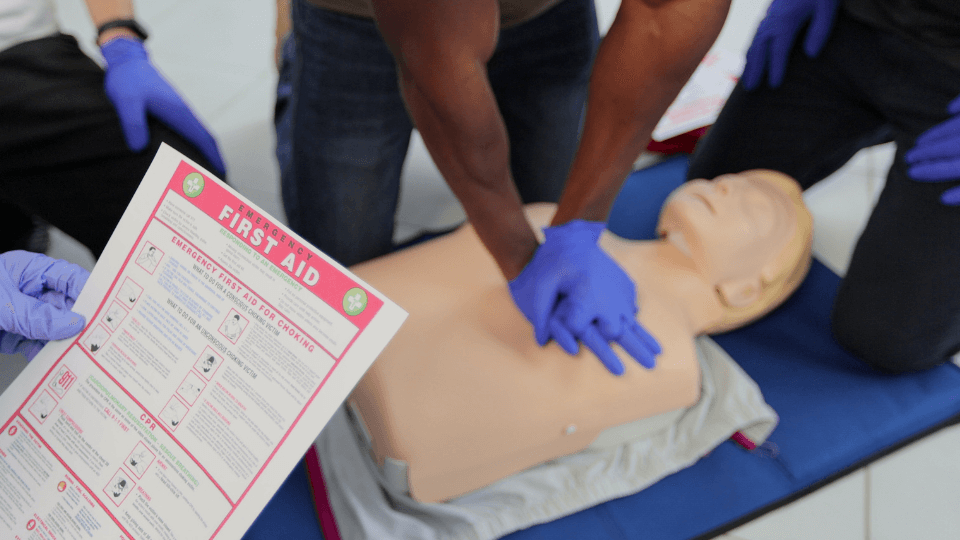
Table of Contents
Learning how to perform CPR could help you save a life. Every year, approximately 25,000 Australians experience a cardiac arrest outside of hospital settings, yet only around 12% survive. The difference between life and death often comes down to whether bystanders take immediate action. Cardiopulmonary resuscitation is an emergency procedure that can keep blood and oxygen flowing to the brain and other vital organs when someone’s heart stops beating. CPR can double or triple a person’s chance of survival when performed quickly, and an automated external defibrillator can increase survival rates to around 50%. Anyone can learn how to perform CPR, and that knowledge could one day save the life of a colleague, family member, or stranger.
When to Perform Cardiopulmonary Resuscitation
You’ll need to know how to perform CPR if someone isn’t breathing correctly or if they have experienced cardiac arrest, which occurs when someone’s heart stops effectively pumping blood around their body. The person will be unresponsive, not breathing normally, or not breathing at all. Without CPR, the brain and other organs are deprived of blood and oxygen, leading to death within minutes.
To check whether someone needs CPR, use the DRSABCD action plan. First, check for Danger to ensure the area is safe for you, bystanders, and the person. Next, check for Response by asking their name loudly and squeezing their shoulders firmly. If there is no response, Send for help by calling triple zero (000). Then check the Airway by opening their mouth and looking for and removing any obstructions. Check their Breathing by looking for chest movements, listening for breath sounds, and feeling for breath on your cheek. If the person is not breathing normally, begin CPR. Finally, attach a Defibrillator in instances of cardiac arrest.
How to Perform CPR on Adults

For how to perform CPR on adults, position the person on their back on a hard, flat surface such as the ground. Kneel beside their chest.
Place the heel of your hand on the lower half of the breastbone in the centre of the person’s chest with your other hand on top and your fingers interlocked. Position yourself directly above the person’s chest with your arms straight. Press straight down for a depth of around 5cm. Allow the chest to fully recoil between each compression. Deliver compressions at a rate of 1 to 2 every second for a total of 30 compressions.
Next, to deliver rescue breaths, open the person’s airway by placing one hand on their forehead and gently tilt their head back while gently tilting their chin down with your other hand. Pinch the soft part of their nose closed, seal your mouth over their mouth, and blow steadily for about 1 second while watching for chest rise. Allow the chest to fall, then give a second breath.
Repeat this cycle of 30 chest compressions to 2 rescue breaths, stopping only to use an AED in between if it is necessary to use one. Otherwise, you should stop CPR when the person starts breathing normally and shows signs of life such as movement or coughing, when emergency medical help arrives to take over, or when you become too exhausted to continue. If another person is available, swap roles every two minutes to maintain high quality compressions.
Using an Automated External Defibrillator (AED)

An automated external defibrillator is a portable device that delivers an electrical shock to the heart to restore a normal rhythm in instances of cardiac arrest. Their clear voice prompts and visual instructions are designed to be straightforward and guide anyone through the steps.
To use an AED, first turn on the device. Attach the adhesive pads to the person’s bare chest as shown in the diagrams on the pads. One pad goes on the upper right chest below the collarbone, while the other goes on the lower left side of the chest. Ensure no one is touching the person while the AED analyses the heart rhythm.
If a shock is advised, the AED will tell you to stand clear. Make sure no one is touching the person, then press the shock button when prompted. After the shock is delivered, immediately resume CPR starting with chest compressions.
Infant and Baby CPR

Baby CPR requires a modified technique due to an infant’s smaller size. Use two fingers placed on the lower half of their breastbone rather than the heel of your hand. The compression depth for infants should be adjusted to approximately 4cm.
When giving rescue breaths to an infant, tilting their head is not necessary due to their developing airways. Rather than pinching their nose, cover both the mouth and nose with your mouth to create a seal. Only deliver a gentle puff of air rather than a full breath due to their more fragile lungs.
An AED should not be used on a child under the age of one year old.
Save a Life Through CPR Training
CPR is a skill that empowers ordinary people to take extraordinary action when someone’s heart stops. By learning how to perform CPR, you give a person in cardiac arrest the best possible chance of survival before paramedics arrive.
Skills Training College offers nationally accredited CPR courses delivered by experienced trainers across Australia. Our hands-on training ensures you leave with the practical skills to respond effectively in a real emergency. Enrol in a CPR course today and become someone who can save the life of a colleague, family member, or stranger in need.
FAQs
What is the Difference Between Cardiac Arrest and a Heart Attack?
A heart attack occurs when blood flow to the heart is blocked, usually by a clot, causing heart muscle to die from lack of oxygen. Cardiac arrest is when the heart suddenly stops beating due to an electrical malfunction. While a heart attack can lead to cardiac arrest, most heart attacks do not result in cardiac arrest.
When Should I Use Hands-Only CPR?
Hands-only CPR is appropriate if you feel uncomfortable providing mouth-to-mouth resuscitation. In all circumstances, some CPR is always better than no CPR. However, rescue breaths are strongly recommended in instances of drowning due to the lack of oxygen being a significant factor.
Can I Learn CPR as Part of First Aid Training?
Yes, CPR training is included in first aid courses and is also available as a standalone course. The most common reason to take a CPR only course is because first aid courses require refresher training every three years while CPR renewal is recommended annually.


