
Working in Aged Care: What New Workers Should Know in 2026

Table of Contents
Key Takeaways
- Aged care roles range from personal care and lifestyle support to kitchen, laundry and office work, in residential homes and in people’s own homes.
- Every aged care worker must follow the Aged Care Code of Conduct under the Aged Care Act 2024, and providers must give workers training and support.
- Safe Work Australia’s data shows the most common injuries come from helping people move. They are well understood and largely preventable with training, equipment and good habits.
Aged care is one of Australia’s fastest-growing fields, and it suits people who want work that matters. If you’re thinking about working in aged care, this guide covers what the job involves, who works in it, the rules you’ll follow, and what Safe Work Australia’s data shows about staying safe and well in the role.
What Does Working in Aged Care Involve?
The Aged Care Quality and Safety Commission lists a wide range of aged care workers, including:
- support workers, personal care workers, lifestyle coordinators and care companions
- allied health professionals
- kitchen, laundry, garden, maintenance and office staff
- service coordinators and case managers
- volunteers who deliver care and services
Care roles usually include helping residents or clients with personal care, mobility, meals and daily activities, spending time with them, noticing changes in their health or mood and recording what you see. You might work in a residential aged care home or visit people in their own homes through home care services.
Who Works in Aged Care?
Safe Work Australia’s profile of the nursing, care and support workforce (May 2025), which includes aged and disabled carers, shows a large and diverse workforce:
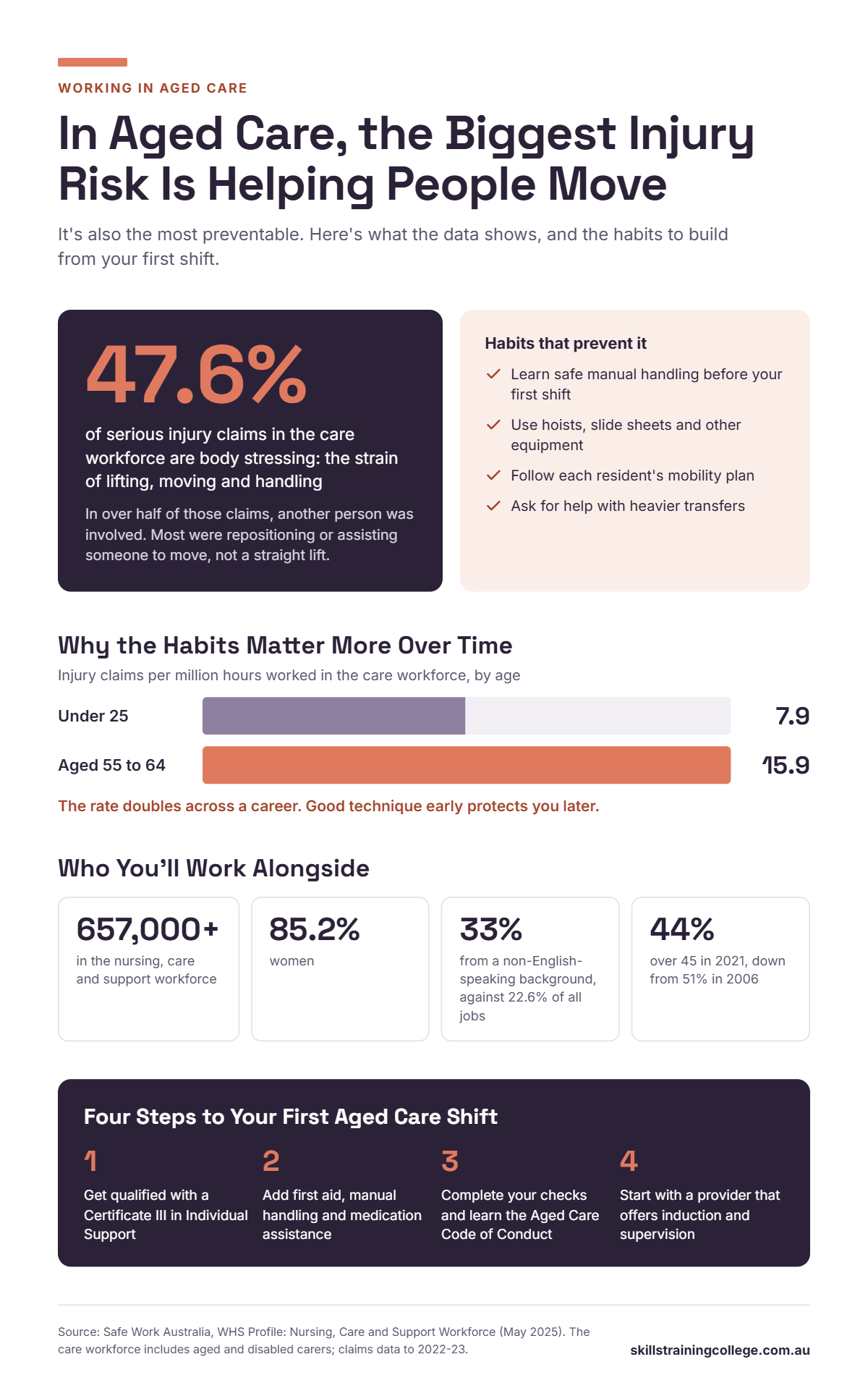
- more than 657,000 people (2021 Census)
- 85.2% women
- 33% from a non-English-speaking background, against 22.6% across all occupations
- getting younger: 44% were over 45 in 2021, down from 51% in 2006
Jobs and Skills Australia’s Occupation Shortage List shows ongoing shortages in these occupations, so trained workers are in demand. The diversity of the workforce also means people from many backgrounds, including international students, build careers here.
What the Data Says About Common Workplace Risks, and How to Avoid Them
Aged care work is physical and emotional, and the risks are well known. That’s good news: well-known risks have well-known solutions.
Helping People Move
Body stressing (the strain of lifting, moving and handling) is the most common cause of serious injury claims in the care workforce, averaging 47.6% of claims over a decade. In over half of those claims, the injury involved another person. Most involve handling other than a straight lift, such as repositioning or assisting someone to move.
How to avoid it: learn safe manual handling before your first shift, use hoists, slide sheets and other equipment, follow each resident’s mobility plan, and ask for help with heavier transfers. Our manual handling course covers the techniques.
Supporting People Through Distress or Confusion
Some residents, including people living with dementia, may show distress through their behaviour. In Safe Work Australia’s 2026 Worker Exposure Survey, 14.5% of health care and social assistance workers said they faced verbal abuse, threats or violence often or all the time, and 32.3% faced traumatic situations often.
How to avoid it: understanding the person and their care plan, calm communication, recognising triggers, reporting incidents, and using your team and debriefs for support. Training builds these skills, and so does experience.
Looking After Yourself as You Gain Experience
Injury claim rates in the care workforce rise with age, from 7.9 per million hours worked for under-25s to 15.9 at 55 to 64. Good technique and equipment matter more the longer you stay in the job, so build the habits early.
Rules Every Aged Care Worker Should Know

- Aged Care Code of Conduct: under the Aged Care Act 2024, aged care workers must comply with the Code. It sets out how to treat older people with respect, make safe decisions and respond to difficult situations.
- Protecting people who raise concerns: workers must not threaten or harm anyone who gives feedback or makes a complaint, and must not share their identity except as allowed.
- Honesty: workers must not give false or misleading information.
- Training and support: the Commission says providers must give workers access to training so they understand their obligations and provide quality care.
- Checks: providers will ask you to complete screening such as a police check before you start. Ask your provider which checks apply.
- Work health and safety: your employer must give you training, instruction and supervision, and you must take reasonable care and follow reasonable safety instructions.
How to Become an Aged Care Worker
- Get qualified. The Certificate III in Individual Support is the most common entry qualification. Skills Training College also offers an aged care course and an aged care course for international students.
- Add practical skills. Provide First Aid, manual handling and medication assistance (HLTHPS006) are often expected.
- Complete your checks and learn the Aged Care Code of Conduct.
- Start with a supportive provider that offers induction, supervision and ongoing training.
Save on the essentials with a healthcare course bundle.
Frequently Asked Questions
What Qualifications Do You Need to Work in Aged Care?
Most employers look for a Certificate III in Individual Support for care roles, along with first aid and often manual handling and medication training. You will also need to pass screening checks such as a police check.
What Does an Aged Care Worker Do?
Aged care workers help older people with personal care, mobility, meals, daily activities and social connection, in residential homes or people’s own homes. They also notice and report changes in a person’s health or wellbeing.
Is Working in Aged Care Physically Demanding?
It can be, mainly when helping people move. Safe Work Australia’s data shows body stressing is the most common cause of serious injury claims in care work. Manual handling training and equipment such as hoists prevent most of these injuries.
What Is the Aged Care Code of Conduct?
It is a set of standards all aged care workers must follow under the Aged Care Act 2024. It covers treating older people with respect and care, making safe and fair decisions, responding to difficult situations and protecting wellbeing.
Can International Students Work in Aged Care?
Many people from overseas build careers in aged care, and a third of the care workforce is from a non-English-speaking background. Skills Training College offers aged care courses for international students. Check your visa’s work conditions before you start.
What Are the Challenges of Working in Aged Care?
The main ones are the physical side of helping people move and the emotional side of supporting people through illness, confusion or the end of life. Training, equipment, a good team and regular debriefs make both manageable.
Sources
- Aged Care Quality and Safety Commission, Workers and their responsibilities. https://www.agedcarequality.gov.au/workers/workers-and-their-responsibilities
- Safe Work Australia, WHS Profile: Nursing, Care and Support Workforce (May 2025). https://data.safeworkaustralia.gov.au/profile/whs-profile-nursing-care-support-workforce
- Safe Work Australia, 2026 Australian Worker Exposure Survey: Analytical Report (September 2026). https://data.safeworkaustralia.gov.au/datasets/australian-worker-exposure-survey


