Types of Bees: Australian Native Bee Species And Sting First Aid
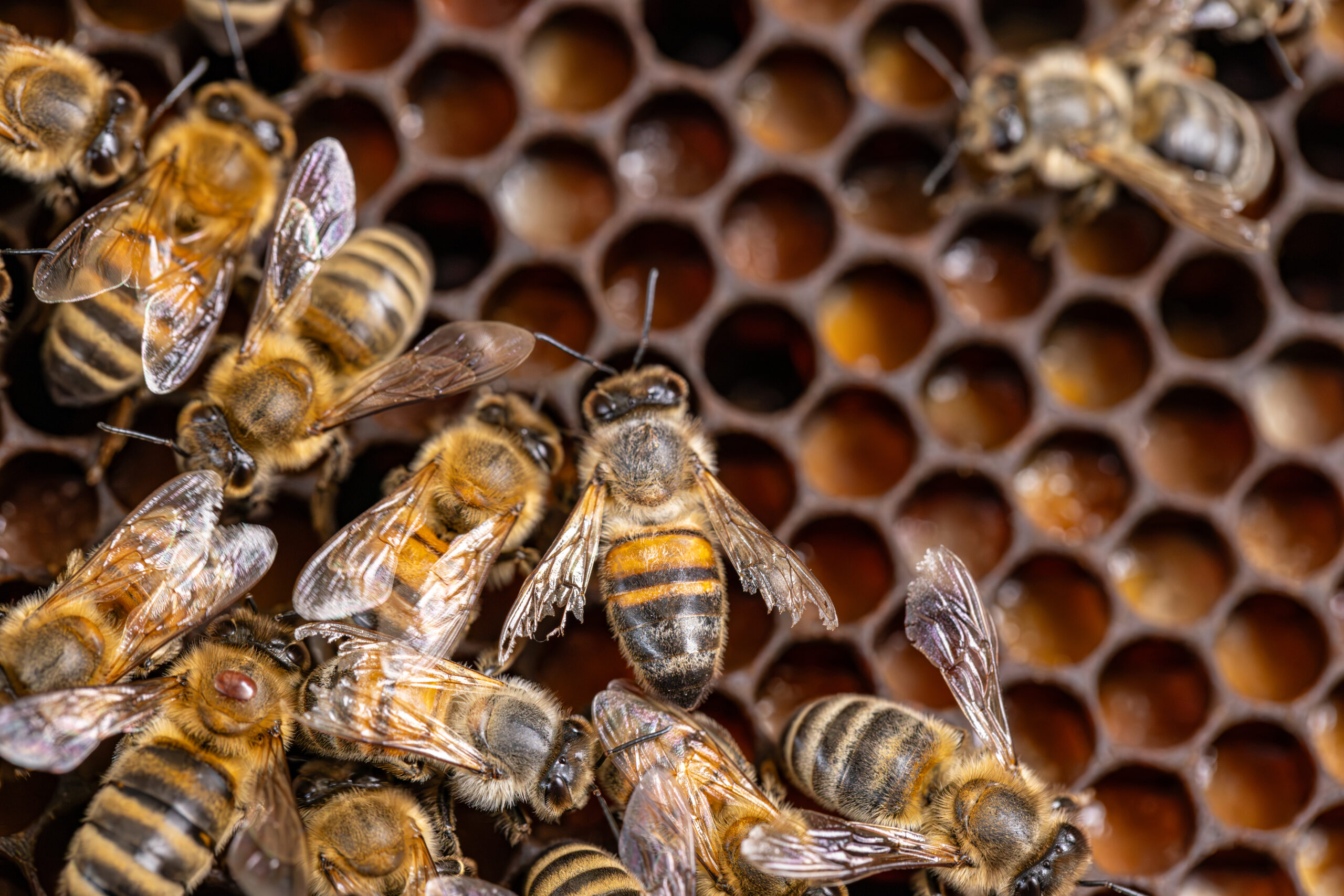
Table of Contents
Types of bees in Australia include more than 1,660 known native species. Females of every native species except the stingless bees have a sting. People who note a bee’s colour, size, and nest site know whether there is a barbed sting to scrape out of a person’s skin and whether that bee poses a sting risk.
The Many Different Types of Australian Native Bees
Australia is home to bees found nowhere else. Our native species range from solitary bees that raise their young alone to species that live fully social lives. People who can spot the differences between them know which bee is on a flower and whether its nest lies in the soil underfoot or in a dead branch overhead.
Five of the world’s seven bee families live in Australia. One of them is found nowhere else. An estimated third of them have no scientific description yet, so a bee on a backyard flower can be one that has no scientific name yet.
European Honey Bees
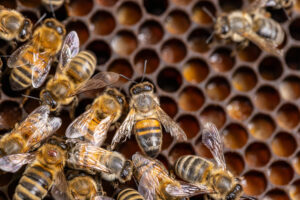
European honey bees are an introduced types of bees that Australian beekeepers keep in hives. They measure around 12 millimetres long, with a golden-brown body, darker stripes across the abdomen, and fuzzy hair on the thorax.
European honey bees also go by the name western honey bees. They are social bees whose colonies contain one queen, male drones, and female worker bees that gather nectar and pollen and feed the colony’s young. Guards at the entrance to their nest sting anything that disturbs it.
Bumble Bees
Australia has no native species of bumble bee. One introduced species has lived in Tasmania since it was first seen there in 1992.
Tasmanian bumble bees measure 8 to 22 millimetres for workers and up to 25 millimetres for queens. They have black fur, a yellow stripe across the thorax, another across the abdomen, and a white or buff tail.
Australian Stingless Bees
Australian stingless bees are native honey bees found across the north and east of the country. They come in eleven species and are the only native types of bees without a sting.
Stingless bees live in colonies inside tree hollows and wall cavities. Their workers make their nests from wax and plant resin and store honey and pollen in small pots.
Blue-Banded Bees
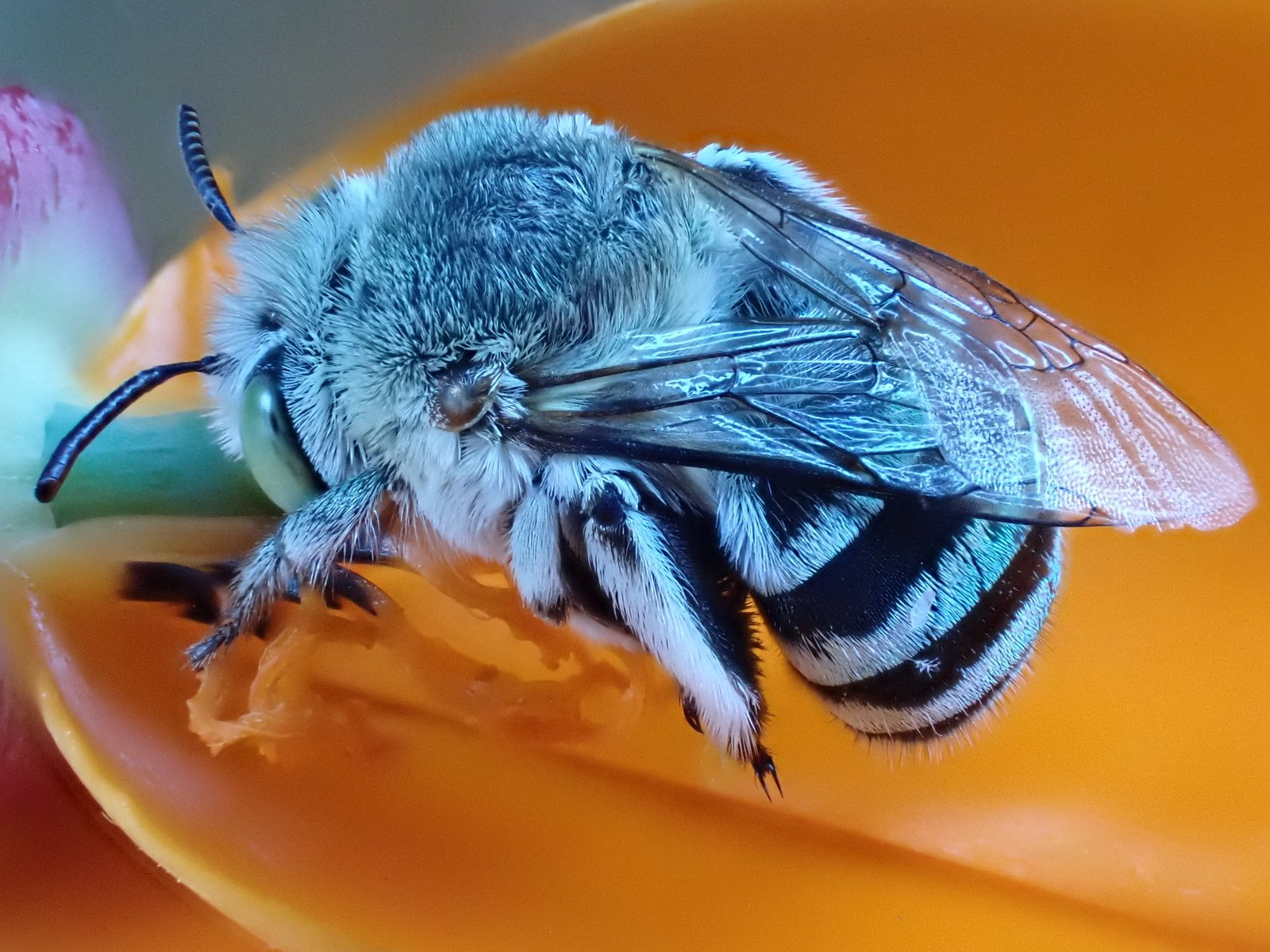
Blue-banded bees are native types of bees with pale blue stripes across a black abdomen and reddish-brown fur on the thorax. Small round holes in soft sandstone, clay banks, and crumbling brick mortar can be burrows that female bees dig for their own young.
Female blue-banded bees grip a flower and vibrate their flight muscles to shake loose pollen that honey bees cannot collect. They pollinate tomato flowers as well as bumble bees do, which helps tomato plants in a home garden set fruit.
Male blue-banded bees sleep clinging to plant stems by their jaws. They have no sting, so a row of them on a stem poses no sting risk.
Blue-banded bee nests attract a blue-spotted parasite known as a cuckoo bee. It lays its egg inside a burrow so that its larva eats the pollen and nectar stored for the nest owner’s young.
Teddy Bear Bees
Teddy bear bees are native types of bees covered in golden-brown fur, with a body 13 to 18 millimetres long. They live along eastern Australia from Queensland to Victoria.
Female teddy bear bees dig their burrows in creek banks or garden rubble with some overhanging shelter. Each burrow ends in several urn-shaped cells, with an egg and a store of pollen and nectar in each.
Great Carpenter Bee
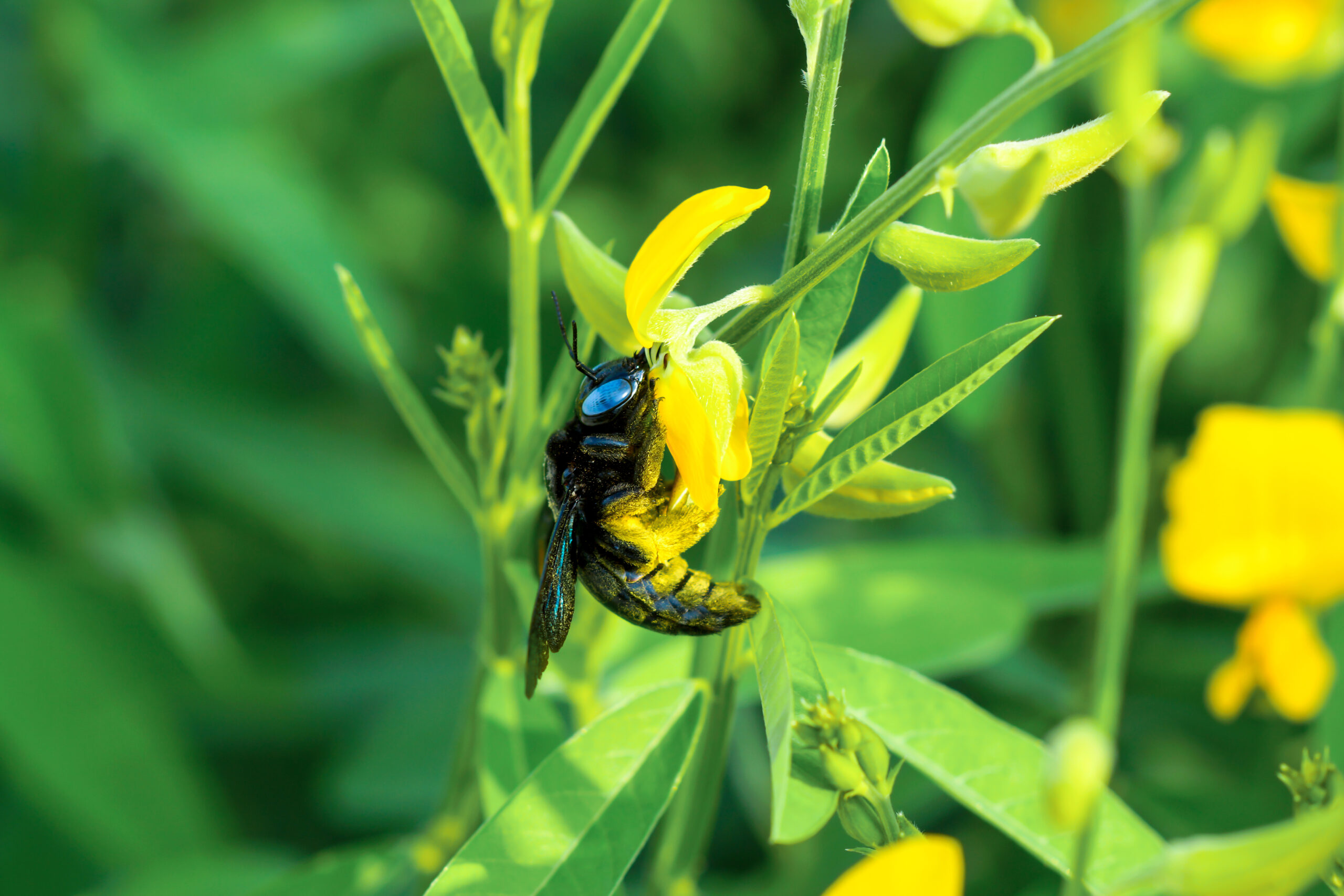
Great carpenter bees are the largest native bees in Australia, with females growing up to 23 millimetres long. They live across the Northern Territory, Queensland, and the northern parts of New South Wales and Western Australia.
Female great carpenter bees have a glossy black abdomen and a thorax covered in bright yellow fur. Males are covered in golden or olive fur and pass for one of the other types of bees.
Great carpenter bees chew nest tunnels into soft dead timber such as old branches and grass-tree flower stems. A round hole in timber with a large black-and-yellow bee flying in and out is one of their nests. Females can deliver a painful sting.
Leafcutter Bees
Leafcutter bees are solitary native types of bees that line their nests with pieces of leaf. Females cut neat circles and ovals from the edges of soft leaves and carry each piece to a hollow stem, a hole in timber, or a tube in a bee hotel. Rows of round notches along the edges of rose or bean leaves are a sign of leafcutter bees nesting nearby.
Resin Bees
Resin bees are native types of bees that collect plant resin to make and seal their nests. Researchers described 71 new species of resin pot bees in 2025. That group lives in every state and territory except Tasmania.
Resin pot bees hang pots of resin from twigs or bark to protect their young. Their relatives raise young behind hard, glossy plugs of resin in the holes of bee hotels.
Sweat Bees
Sweat bees are small native types of bees that settle on skin to drink the salt and moisture in human sweat. Their bodies range from dull black to shiny metallic green.
Homalictus bees are tiny sweat bees that dig nests in open ground, where several females can use one entrance. Small holes in a patch of bare soil with bees coming and going are one of their nest sites.
Solitary Bees
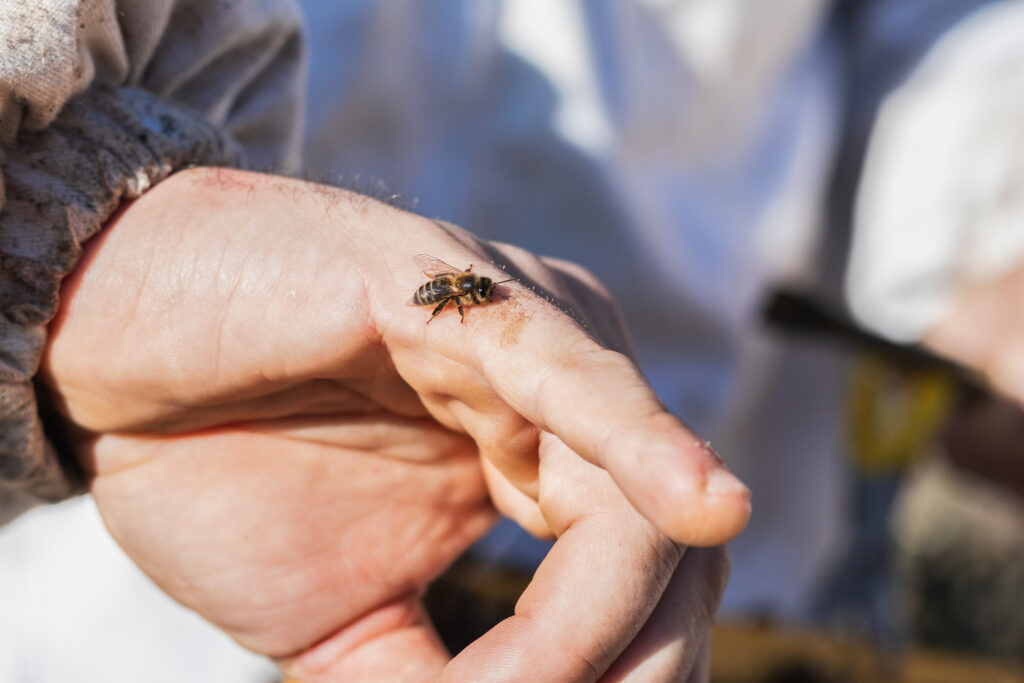
Solitary bees are the types of bees that live without a colony, a queen, or worker bees. Each female bee builds or finds her own nest, stocks it with pollen and nectar, and lays her eggs in it.
Ground bees are native solitary bees that dig their burrows in bare soil. A bare, unmulched patch of earth gives them a nest site in a garden.
Masked bees are slim, almost hairless bees with yellow or white markings on their faces that earn them the other common name of yellow-faced bees. They swallow pollen and carry it home inside their bodies. A slim bee with a pale face and no pollen on its legs is likely a masked bee.
Honey Bees in Australia
Honey bees in Australia descend from European colonies introduced in 1822 for honey. Swarms that escaped from hives have since formed feral colonies across most of Australia.
Of all the types of bees in Australia, honey bees provide most of the insect pollination that Australian agriculture benefits from. A swarm of honey bees hanging from a branch or fence is a colony looking for a new home. Contact local beekeepers to collect it and move it into a hive.
Bee Sting First Aid
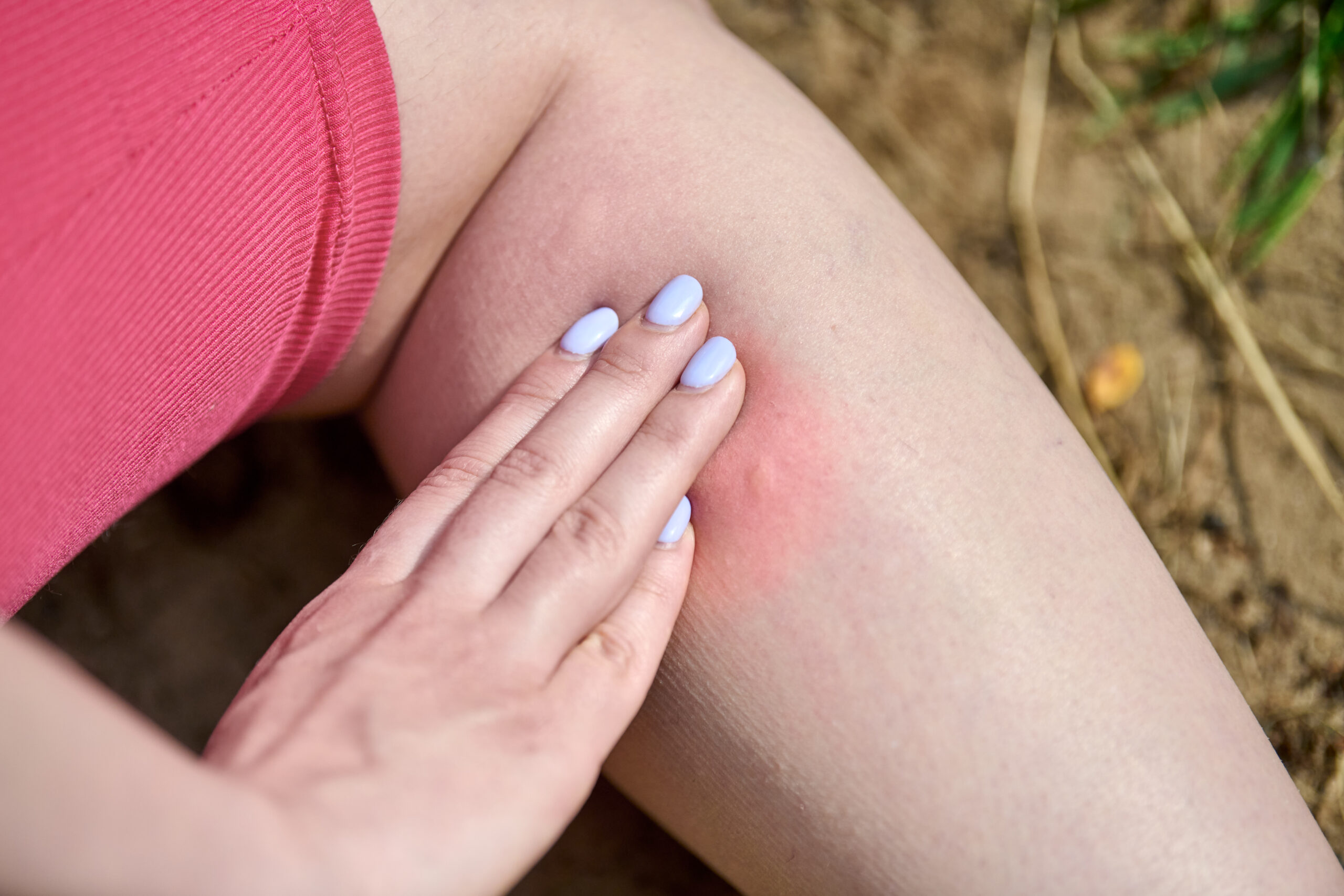
Walk a stung person away from any nest and the bees around it. Scrape any sting left in a person’s skin out sideways with a fingernail or the edge of a bank card as quickly as possible. Do not pull or pinch the sting as this can squeeze more venom from its sac.
Wash a sting site with soap and water. Wrap an ice pack in a cloth and place it on the sting for 15 minutes. Apply a second cold pack if pain continues. Seek medical care straight away after a sting inside a person’s mouth, on their face or neck, or near their eye, or after stings from many bees at once.
Watch anyone stung by a bee for signs of anaphylaxis, a severe allergic reaction to venom from any of the types of bees that sting. Signs include:
- difficult or noisy breathing
- swelling of the tongue
- swelling or tightness in the throat
- wheeze or a persistent cough
- difficulty talking or a hoarse voice
- persistent dizziness or collapse
- paleness and limpness in young children
- abdominal pain and vomiting
Lay a person with signs of anaphylaxis flat. Let them sit with their legs out straight if they struggle to breathe lying down. Keep them lying or sitting until paramedics take over. Give them their adrenaline autoinjector into the outer middle thigh if they have one. Call 000 for an ambulance. Use a second autoinjector after five minutes if there is no improvement and another one is available.
First Aid For Any Types of Bees in Australia
Most stings from the types of bees in Australia settle within a day. A sting that needs medical care can look like any other at first. First aid training gives people the judgement to tell a sting that will settle from one that needs help and the skills to respond to either on the spot. Enrol in first aid training to give a stung child, partner, or workmate that help.
FAQs
How Can I Tell The Difference Between Bees and Wasps?
Wasps have a thin, stalk-like waist and body hair made of single strands. Bees have a thicker waist and feathery, branched hairs that trap pollen as they feed.
How Can I Recognise A Bee Hive or Nest?
Look for small holes in soil, timber, plant stems, or walls with fresh sawdust, loose soil, or yellow pollen dust around the opening. A hole sealed with resin or pieces of leaf contains a nest. Colonies of social bees nest in larger cavities such as tree hollows, roof spaces, and gaps in walls.
How Many Different Types of Bees Are There Globally?
Scientists have described more than 20,700 species of bees worldwide. New species are added to that total every year.
Are Any Types of Bees Disappearing?
Some. The metallic green carpenter bee has disappeared from Victoria after land clearing removed the banksias and grass trees it nests in. It survives north of Sydney in New South Wales and possibly on Kangaroo Island in South Australia.
Which Flowers Attract Native Bees To A Garden?
Native bees feed on the nectar and pollen of Australian plants such as grevillea, bottlebrush, eucalypts, and blue flax lily. Plant a mix that flowers across different seasons. Native bees then find food through more of the year.